Research and Impact Organization

Building a more compassionate science of sensory understanding using AI

NeuroSense Foundation is dedicated to understanding how non-verbal and neurodivergent individuals experience the world through sensory signals, behavior, context, and AI-driven modeling so families, caregivers, and practitioners can support each person with greater clarity, dignity, and care.

  • 200k+ multimodal observations in the current research dataset
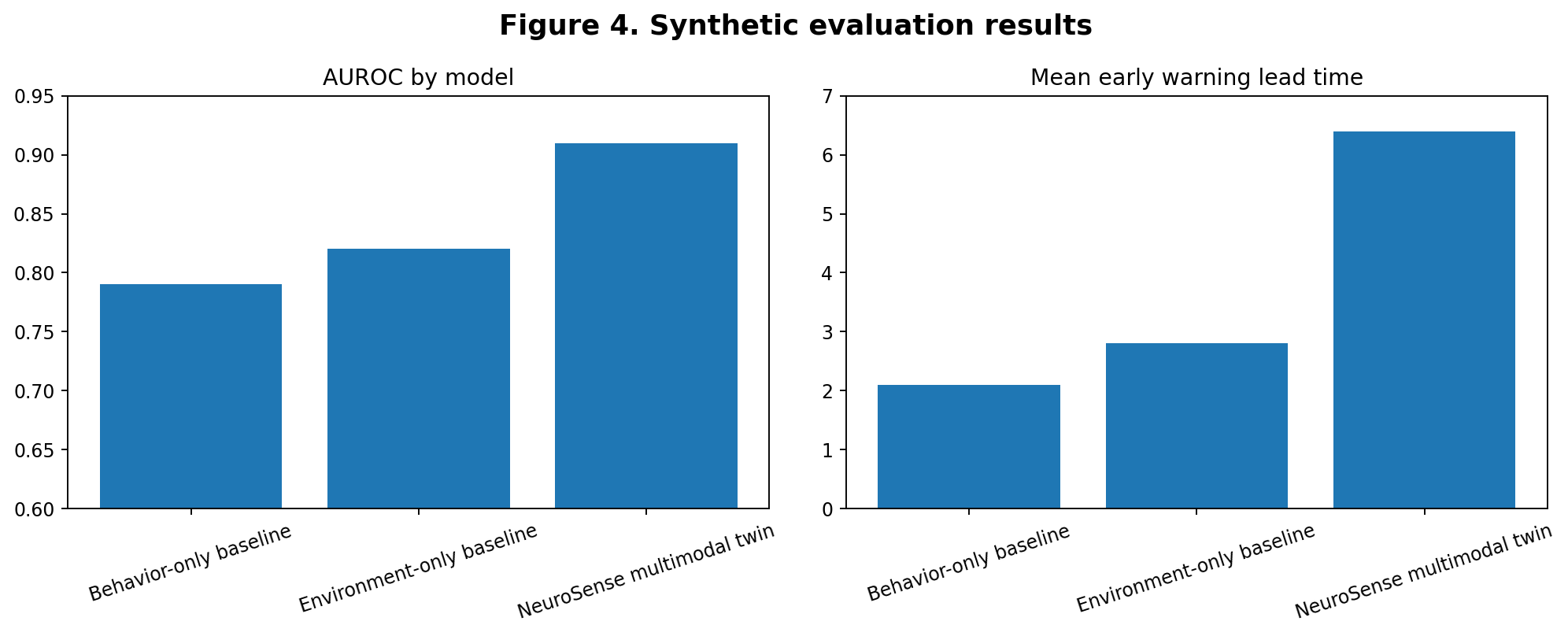
  • 0.91 AUROC for the multimodal NeuroSense model in synthetic evaluation
  • 6.4 min average early warning lead time before dysregulation events
NeuroSense AI

Modeling sensory load, regulation capacity, and dysregulation risk in context.

Vision

A world where every neurodivergent individual is deeply understood.

We envision a future where every non-verbal and neurodivergent person is supported and empowered to live with dignity, connection, and clarity, regardless of their ability to communicate in conventional ways.

Mission

Move beyond reactive care toward deeper, personalized understanding.

NeuroSense Foundation advances research, ethical frameworks, and human-centered AI innovation to understand sensory and behavioral experience, then translates that understanding into practical tools, insights, and systems for real-world support.

Why This Matters

Behavior is often the last visible signal, not the first.

Caregivers are often asked to respond after pacing, rocking, withdrawal, or distress have already appeared. NeuroSense reframes support by asking what happened before those moments: what was present in the environment, how much sensory load accumulated, whether the person had the regulation capacity to absorb it safely, and how AI can help make those hidden patterns visible sooner.

Publication Focus

Research grounded in a multimodal model of sensory experience.

The growing NeuroSense research package now includes a manuscript, synthetic foundation reports, and visual analyses that show how environment, physiology, behavior, and context can be fused by AI into a more practical model of sensory understanding.

Digital twin architecture

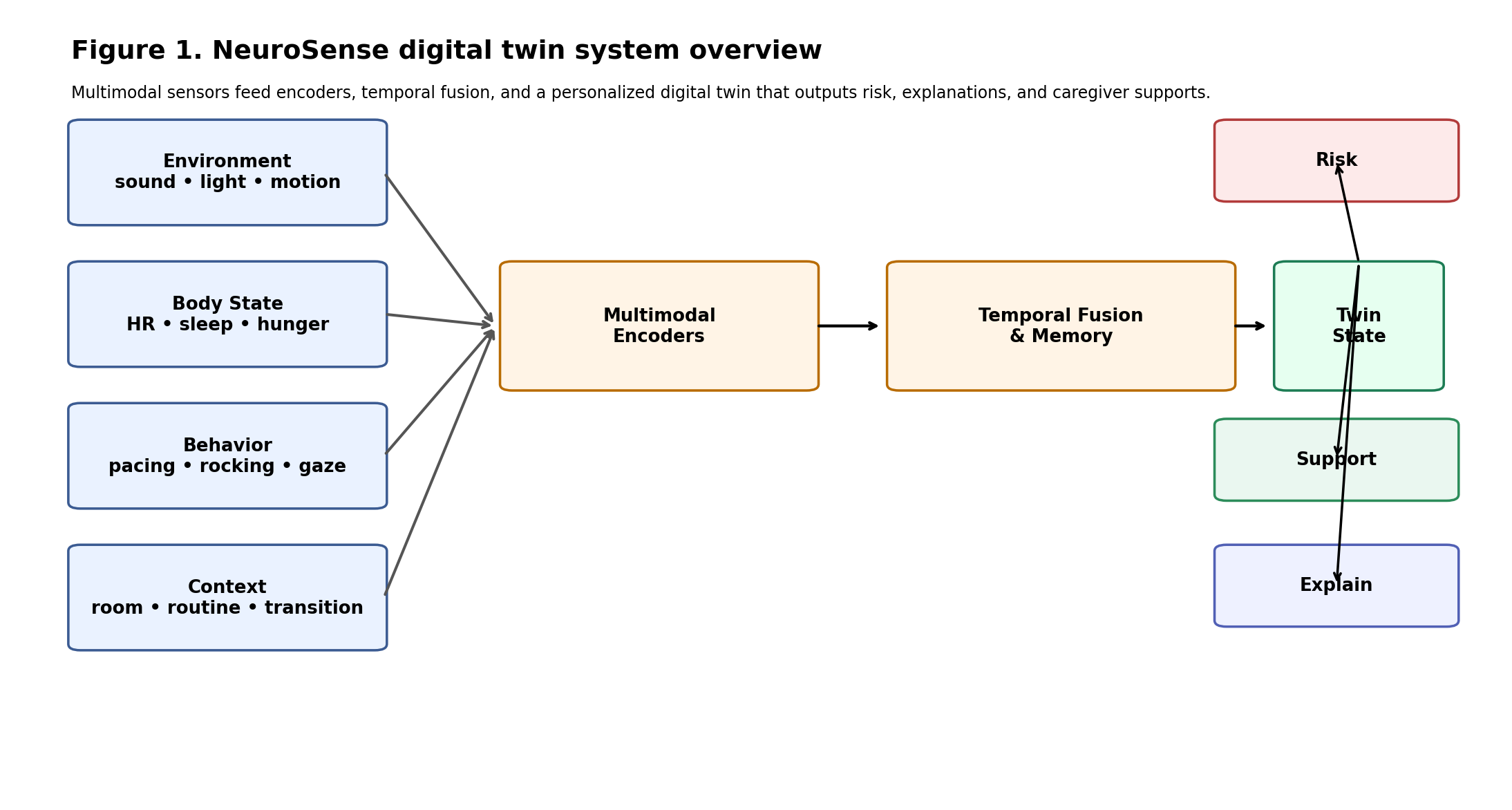
The architecture figure makes the framework legible: environment, body state, behavior, and context flow into multimodal encoders, temporal fusion, and a personalized AI state model that can estimate risk, explain likely triggers, and guide supportive action.

Load-capacity modeling

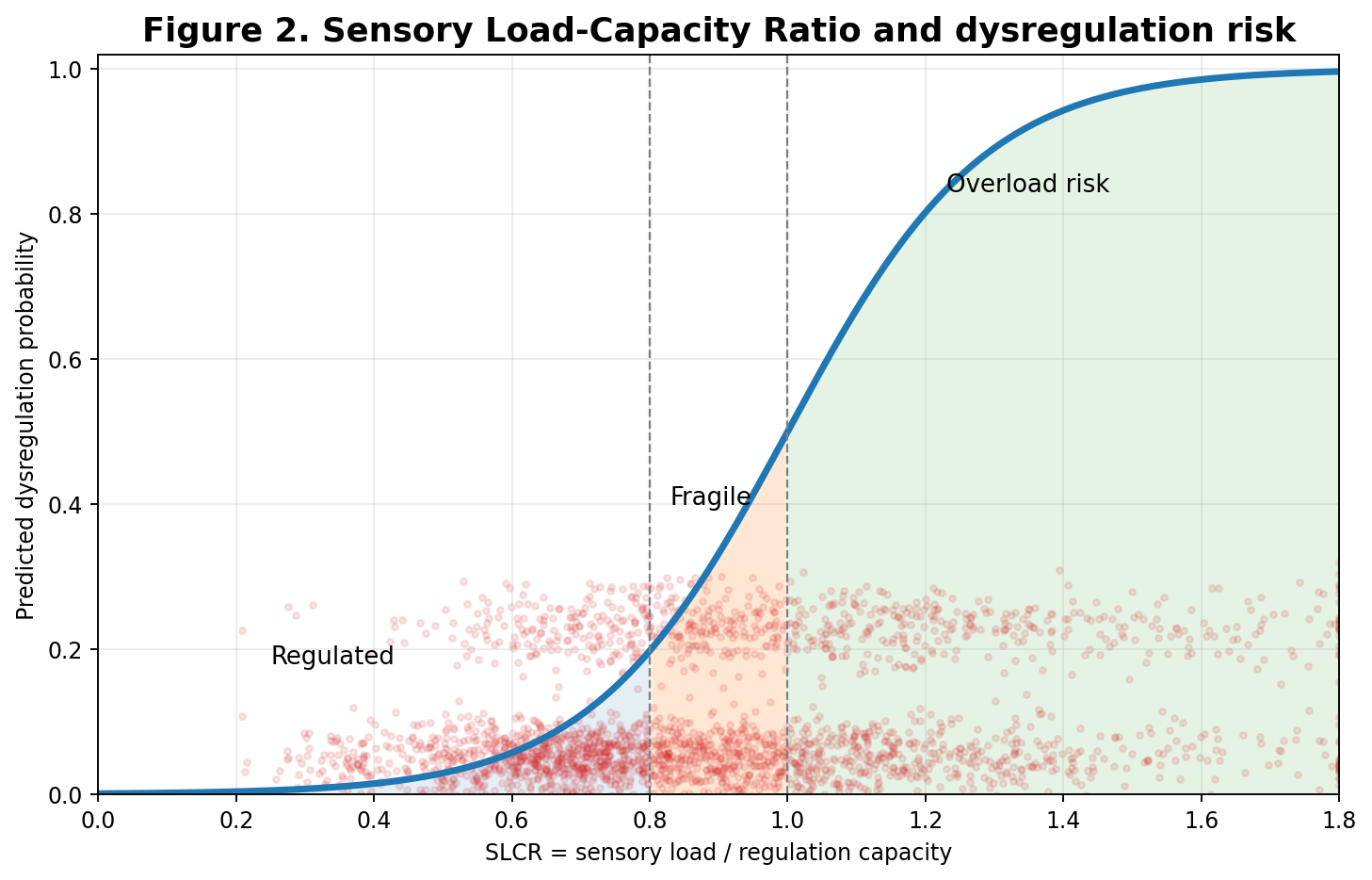
The new load-capacity curve sharpens the central hypothesis: dysregulation risk is not binary, but rises as sensory load begins to exceed regulation capacity. AI helps identify that fragile transition zone before visible overload.

Room-level insight

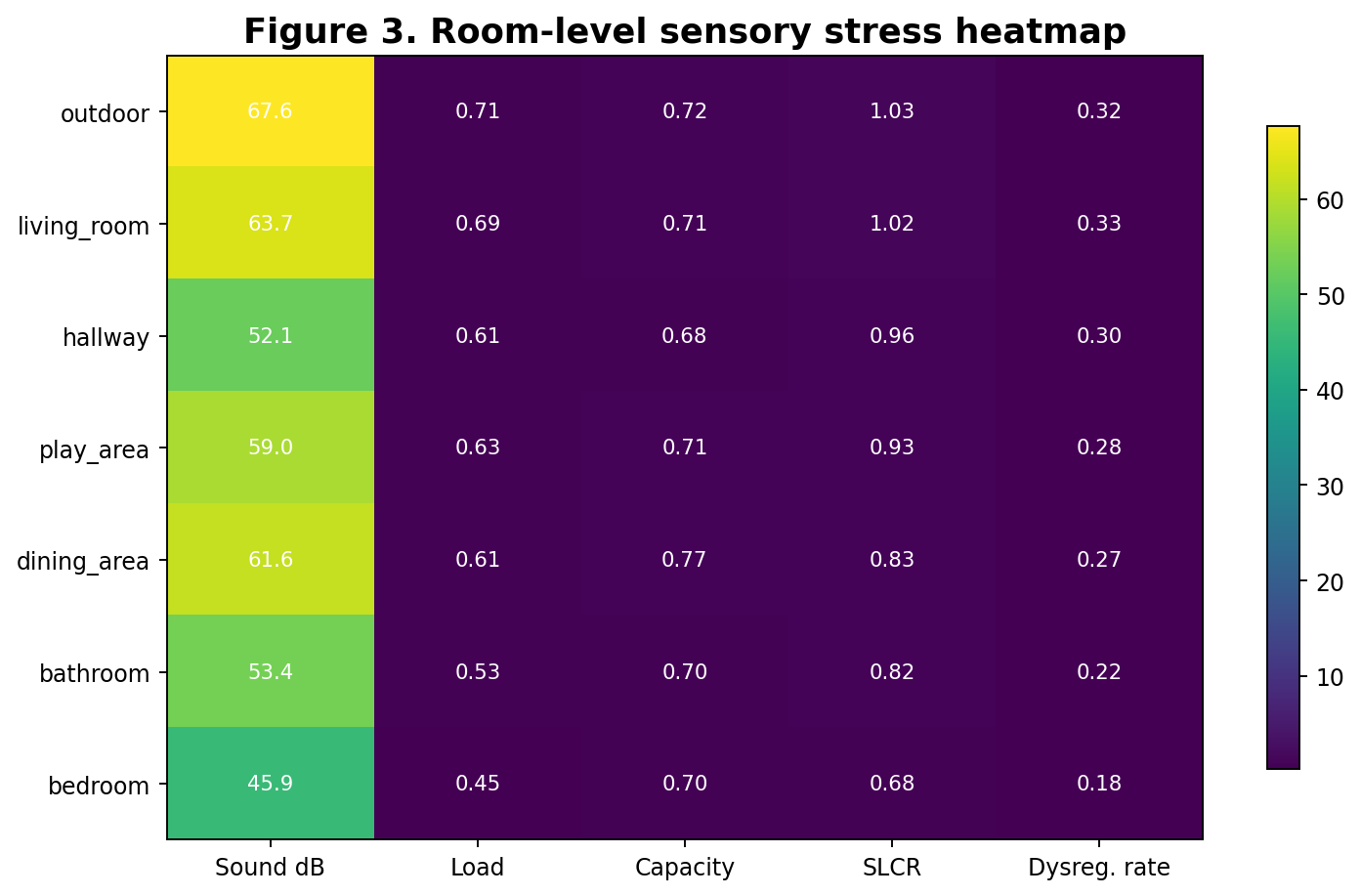
The room heatmap translates the research into everyday care settings by showing how different spaces can carry different sensory burdens. That helps move the conversation from abstract monitoring to AI-assisted environmental design, planning, and support.

NeuroSense digital twin system overview
The architecture shows how multimodal inputs become a twin state that can produce risk estimates, support suggestions, and explanations.
Sensory load-capacity ratio and dysregulation risk curve
A clearer picture of the regulated, fragile, and overload zones around the Sensory Load-Capacity Ratio.
Room-level sensory stress heatmap
A room-level view of sound, load, capacity, SLCR, and dysregulation rate across everyday spaces.

Framework

The NeuroSense model is built around one humane question.

What if moments of dysregulation could be understood as the point where the sensory world exceeds a person's available capacity to cope with it, and AI could surface that shift early enough to help?

01

Sensory load

Environmental intensity is modeled through audio, visual complexity, social density, and novelty, helping AI represent how demanding a space may feel.

02

Regulation capacity

Capacity changes with state. Sleep, fatigue, hunger, and ongoing context can alter how much input a person can tolerate from moment to moment, and AI can model those changes over time.

03

Dysregulation risk

When sensory demand rises above available capacity, NeuroSense AI estimates risk earlier, giving caregivers and practitioners more time to respond supportively.

Evidence Snapshot

What the current study shows.

The expanded visual package makes the evidence easier to interpret for researchers, families, and practitioners who need both AI performance and human explanation.

Synthetic study design

  • 40 simulated participants
  • 21 days of activity
  • 5-minute sampling intervals
  • Environmental, physiological, behavioral, and contextual signals for AI modeling

Comparative performance

Model AUROC Early warning
Behavior baseline 0.79 2.1 min
Environment baseline 0.82 2.8 min
NeuroSense multimodal 0.91 6.4 min
Synthetic evaluation results for NeuroSense and baseline models
The multimodal AI model leads on both AUROC and early warning lead time, reinforcing the value of combining behavioral and environmental context.
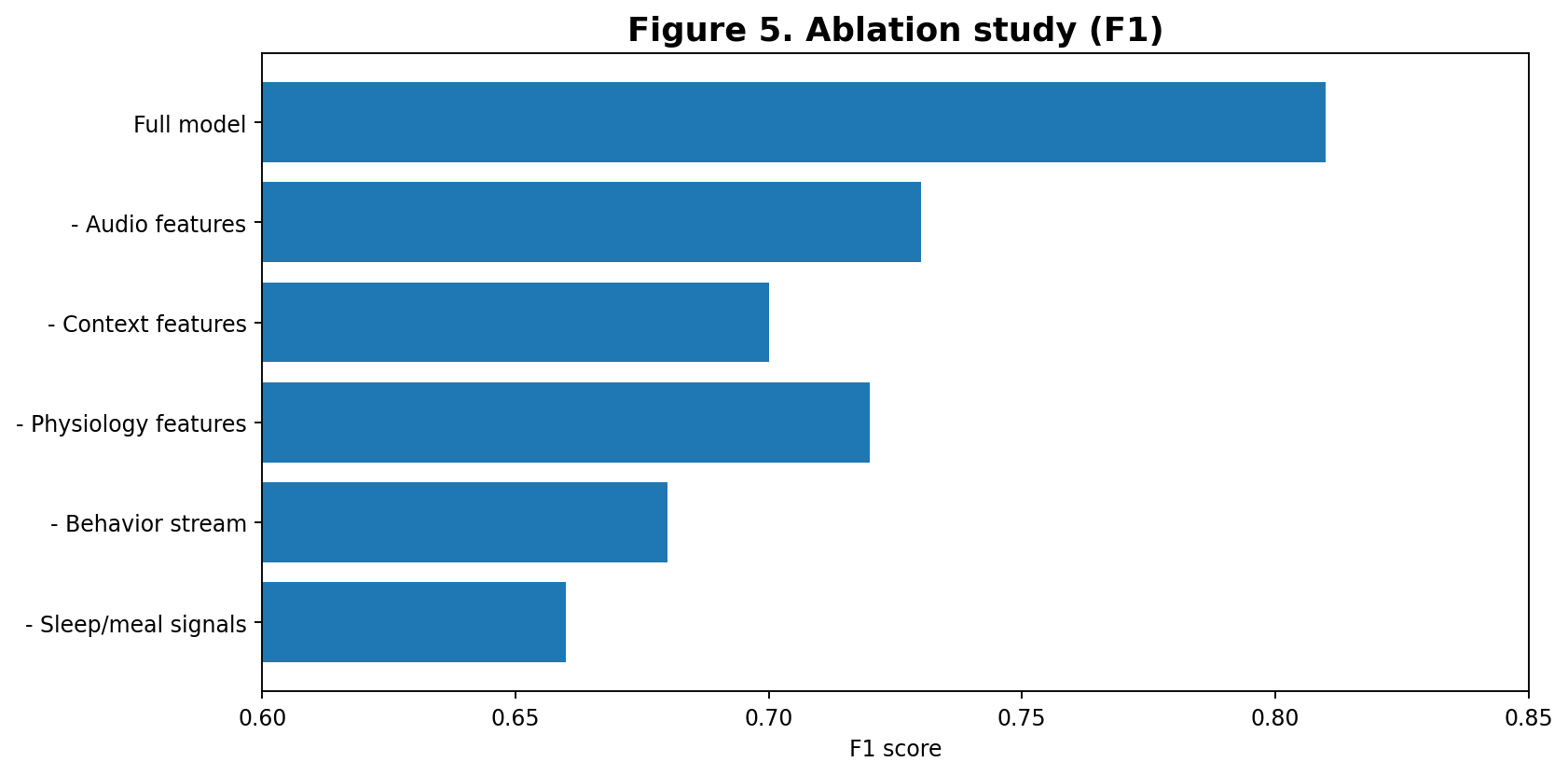
Ablation study showing the impact of removing modality groups
The ablation view suggests that audio, context, physiology, and behavior each contribute meaningful signal to the AI system rather than serving as decorative inputs.

Illustrative Signal Pattern

Context evolves over time, and support should too.

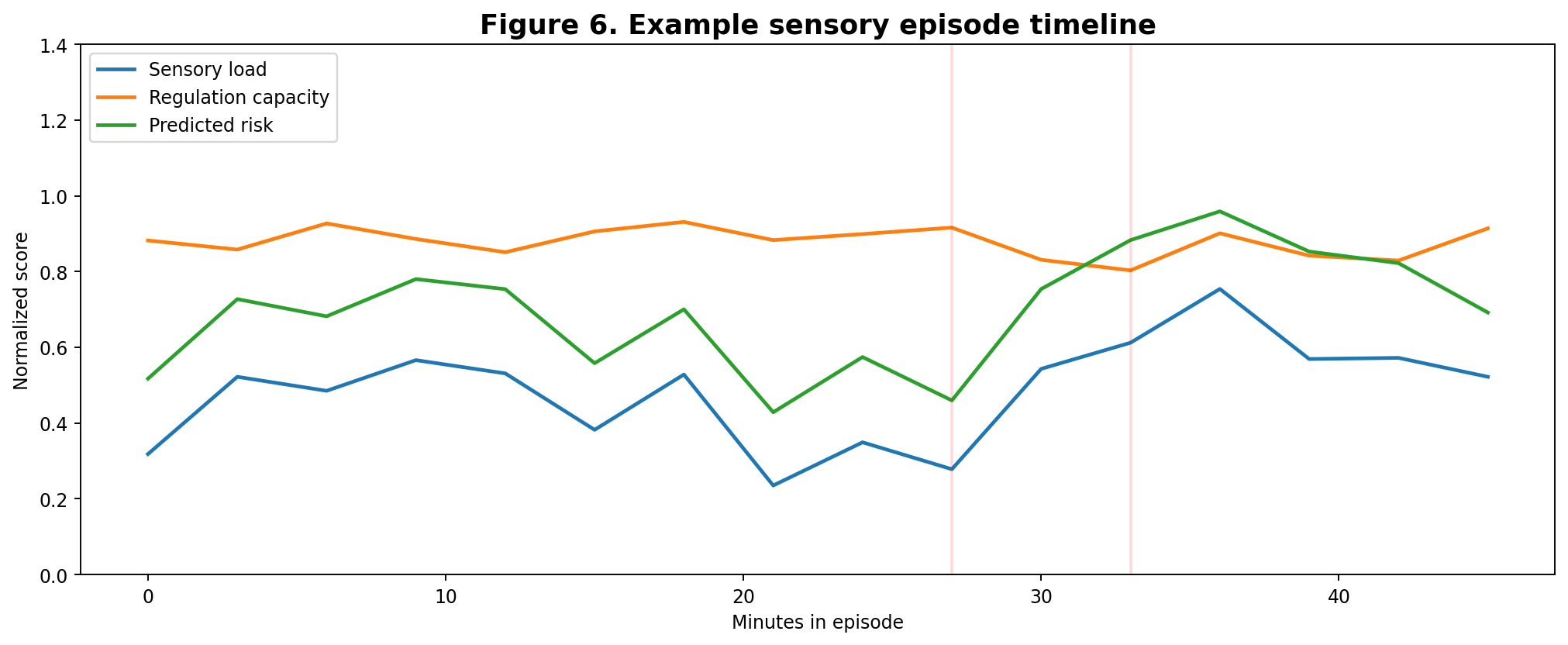
The research models sensory strain as a sequence, not a snapshot. This kind of timeline view helps explain how AI can track environmental conditions, body state, and behavior before a visible episode occurs.

Illustrative NeuroSense episode timeline showing sensory factors over time

From Research to Impact

Where the Foundation is headed.

The added reports and figures point toward a foundation that can bridge rigorous AI modeling with practical caregiver support, ethical deployment, and more humane sensory environments.

Family support

Develop AI-assisted ways for families to understand triggers, fragile transition periods, room-level stressors, and recurring patterns that may otherwise remain invisible.

Care practice

Equip practitioners and caregivers with interpretable tools that encourage earlier, calmer, and more personalized responses grounded in AI-supported context instead of only reacting to outward behavior.

Research infrastructure

Build a stronger research foundation for longitudinal studies, careful real-world validation, and open conversations about what responsible AI and multimodal sensing should look like in practice.

Ethics

Human-centered by design.

Privacy first

The paper emphasizes privacy-conscious AI, local processing of identifiable signals, and storage of feature-level representations wherever possible.

Interpretability

Caregivers need understandable AI explanations of triggers, not black-box alerts without context.

Respect for difference

NeuroSense AI does not assume neurotypical expression patterns and treats sensory experience as deeply individual.

The current publication uses synthetic data, and future work is intended to move carefully into longitudinal real-world AI research with appropriate safeguards.

Collaborate

Join the next chapter of NeuroSense Foundation.

We are building an AI-enabled platform for research, ethical frameworks, and practical tools that can improve understanding for neurodivergent individuals and the people who support them every day.

Contact Us

Back to top